

Our planet has so many secrets that it has yet to reveal to us, and many of these are believed to reside in the deepest parts of the ocean. In order to completely understand the plant and animal life that resides there, marine biologists know that they have to interact with them in their environment. The ocean extends to beneath 10,000 ft. below sea level, and most scuba diving suits are only able to go about 100 ft. under. Even when suits enable divers to go under several hundred feet, they have to resurface within relatively short periods of time. This is because the human body is unable to withstand the pressure of the ocean above them for too long.
Engineers, working alongside marine biologists to overcome these obstacles, designed an Exosuit which enables trained divers to access depths of 1000 ft. The suit is composed from an aluminium alloy and looks very similar to a space suit, with a height of 6 ½ feet tall and a weight of 530 lbs. It is able to store enough oxygen for up to a 50 hour dive, and two-way communication is possible through a fibre-optic tether which also provides live video feed as well as monitoring the suit’s oxygen and pressure.
Divers are able to get in by an opening in the suit’s torso, which has a tear-dropped shaped view-port so that the pilot can see comfortably to chest level. The Exosuit is normally paired with a remote controlled vehicle to collect samples in areas which would previously have been impossible to reach. Its powerful led lights illuminate the darkness that’s expected at these depths and its pressure sensitive foot pads enable the pilot to control the thrusters to move forward, backwards, left and right or up and down.
On its maiden journey the suit was used to explore the mesopelagic zone where light is dim and pressure can be up to 30 times greater than at the surface. Found between 656 and 3280 feet underwater this zone consists mainly of bioluminescent and bio-fluorescent animals. Bioluminescence is the light created by living organisms by a chemical reaction in the creatures’ bodies, while bio-fluorescence is when an animal absorbs light which has short wave lengths (very dim) and reemits it in longer ones in order to guide them along the way.
The ability to study these animals in their natural habitats has led scientists to make remarkable discoveries about both the creatures and their environment. The Exosuit has also made a big difference in the exploration of underwater wrecks and the recovery of the items within. There is still a significant amount of work that is being done on it in order to enable access to greater depths in the near future.
The modern sport of outrigging is a competitive race between two or more teams in outrigger canoes. It was developed in Hawaii in earlier centuries, but the first official outrigger races took place in the early 20th century in Waikiki. The sport has since spread and is now very popular in many countries, including Australia. The difference between outriggers and other canoes is the fact that it is double-hulled. Its stability comes from the distance between its hulls, which are longer and narrower than single-hulled canoes.
 The Birth of Outrigger Canoes
Sea vessels played a major role in the survival of many ancient cultures and the use of outrigger canoes, along the Pacific Rim, can be traced as far back as 30,000 years ago. They facilitated the migration of these ancient cultures along the coast, and beyond. The vessels were used to travel to Hawaii in about 200 A.D, when explorers found the islands in canoes which could hold about 80 people each. These people led here by migrating birds, and brought with them a wide variety of plants and animals. They continued to use the canoes for fishing and transport, as the harsh terrain of the land made it easier to navigate by sea.
The giant Koa trees found on the island were perfect for carving out more outrigger canoes, as a single tree could be used to make each. The Hawaiians made these canoes to withstand harsh ocean conditions, and they are still considered a symbol of how important the sea is to the islanders.
Creating a Sport from Outrigger Canoes
Humans are naturally competitive, and wherever there is the opportunity to prove themselves superior they will take it immediately. Outrigger canoe racing was widely practised when Captain Cook rediscovered the islands, in 1779. The Hawaiians called the sport hei hei wa’a and the competitors were mainly tribal chiefs. Bets were placed on the outcome of the races, and there would be rewards and recognition for the winners. With the arrival of European missionaries, the betting became offensive and Queen Ka’ahumanu banned the races under their influence.
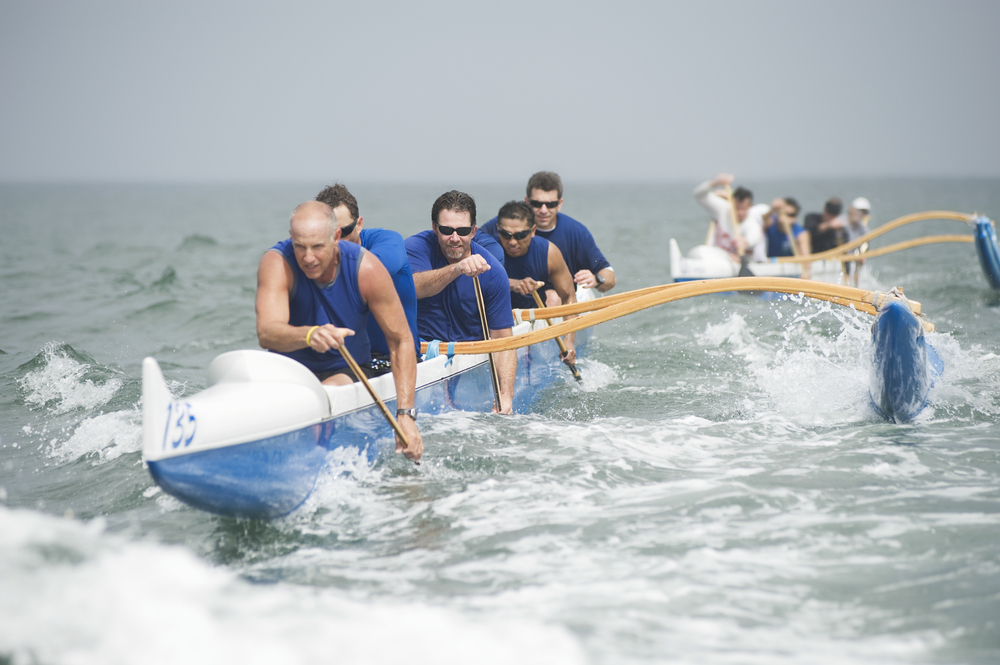 In 1875, the last Hawaiian king, David Kalakaua, resurrected the sport by declaring his birthday on November 16th the annual regatta day. In 1908, the Outrigger Canoe Club was formed in Oahu and the sport continued to grow from there. There are now over 60 canoe clubs in the country and countless others worldwide.
The design of the Hawaiian outrigger canoe is the standard one used in competitions. The most popular in racing are single-seaters, double-seaters and those that can accommodate six people. The six-seater is 13.8m in length with a small outrigger, and all six passengers are equipped with a single bladed paddle. The sixth paddler is responsible for steering the canoe, and the majority of competitive races are divided into sprints, from 500-3000m, and marathons, which are between 5 and 30km.
Ships have been sinking since man started sailing them around the world and, as divers are realising daily, there is still a vast amount of treasure lying undiscovered on the ocean floor. Fortunes have been found in gold, jewellery, antique weapons, art and lots of other rare items. Two ships are still being salvaged that prove that other forms of wealth are just as important to our history as these material things.
-
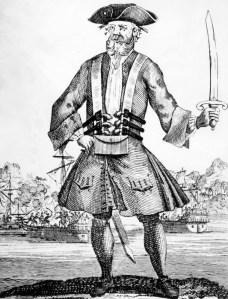 The Queen Anne’s Revenge

Originally a French slavery vessel, this ship was captured by the infamous British pirate, Blackbeard, in 1717 and he renamed it The Queen Anne’s Revenge. This started a period in which European ships which were sailing in the Caribbean were plagued by Blackbeard and his crew. His victims were rescued briefly from his constant plunder, when the ship ran aground in 1718. Blackbeard and his crew abandoned it, taking most of the treasure with them.
 In 1996, it was rediscovered underwater near Beaufort Inlet, located in North Carolina, and the salvaging of its contents began. The ship has yielded many items which provide insight into the way pirates lived while at sea. The variety of cannons, looted from different ships, and other weapons reveal how the pirates would attack and defend themselves. There was also a more extensive supply of medical items than other vessels discovered from the period had on board. Blackbeard and his crew were known for being in excellent health, which made it easier for them to loot ships where the sailors weren’t in good condition. Divers continue to salvage The Queen Anne’s Revenge, and hope to discover even more that represents that particular period and the life of a pirate.
- The Antikythera Wreck
At the beginning of the 20th century, one of the most historically revealing sunken ships was discovered in a cove off the tiny Greek island of Antikythera. Since then the vessel and its contents have been explored and valuable pieces excavated from it. The most notable are the pieces of The Antikythera Mechanism, which is a bronze device which has been slowly remade and shows the technological advancement of the Greeks. The device was found with instructions carved into it and appeared to have been used to monitor the heavenly bodies in our Solar System, including the sun, 5 planets and the moon. The instructions detail the ways in which it could predict lunar eclipses. The mechanism was also used to monitor the cycle of the Greek games, which inspired the Roman Olympics and eventually our modern one.
In addition to the amazing mechanism, the wreck has yielded lots of fine art and other trade goods that are believed to have been gifts. Bronze statues have been found and reassembled and are believed to be representation of the deities, including the goddess Athena. Future exploration of the wreck will use ‘The Iron Man for Underwater Exploration,’ which is a diving suit which will assist explorers to enter areas that were previously inaccessible.
 The West Indian Manatee resides in and around Florida during the colder months of the year. Manatees are mammals and tend to be very seal-like in appearance. They normally have a greyish-brown colour, with thick wrinkled skin, and stiff whiskers on their upper lip. Most manatees have algae growing on their skin, which provides them with protection against the sun. Their flat tails are used as propellers as they move through shallow water, with their front flippers guiding the way. Even though manatees have small eyes and no visible ears they also have very good eyesight and hearing.
These large animals are herbivores and their diet consists mainly of sea grass and fresh water vegetables. They eat between 10-15% of their body’s weight each day using large molars to grind their food. These teeth will fall out and are replaced after they get worn out. The manatee population around Florida is estimated to be about 5000 animals, which are scattered in the warm shallow waters in rivers, bays or near the coast. In addition to the salt, brackish or fresh water that they live in freely in the area many are kept in captivity, for their own protection, since they have become an endangered species.
Manatees are naturally slow moving, gentle creatures and they spend the majority of their day resting and feeding. Their ability to communicate with each other via squeals and movements, such as rolling around when happy, can provide real pleasure to those that they allow to swim and snorkel close by. A full grown adult is between 10 and 12 ft. long, normally weighing between 1500-1800lbs with many growing to be as large as 3000lbs. Their lifespan can be anywhere from 50 to 60 years, with females normally becoming sexually mature by the time they are 9. Manatees go through a gestation period of between 12 and 13 months, after which they give birth to one calf (twins are extremely rare). The baby weighs between 60 and 70 lbs at birth, and the mother will continue to nurse and guide the infant until she believes that it will be able to take care of itself.
 The sea cows normally choose to live in water which is between 3 and 7 ft. deep, using the coast as a breeding and sheltering area. Visitors to the Florida coast are surprised at the curiosity that these animals display, and love the fact that they initiate contact. Even though swimming and snorkelling around the manatees is encouraged, it is not wise to feed them as this makes them unable to survive well in the wild. Divers are not normally able to get very close to the animals because the bubbles caused from the gas scares them away.
The biggest danger to manatees around Florida is humans and, even though it is illegal to do so, many of them are still being hunted and killed for their meat and hide. The species continues to persevere and with the help of the laws which have been put into place to protect them, it is believed that there will soon be many more in the waters off the Florida coast.
Diving has become an extremely popular hobby, and many people travel long distances in order to experience the views of underwater caves, rare sea creatures and the galleys and holds of sunken ships. There are also some one of a kind dives that feature unexpected underwater wonders. These include:
1. The Wreck of the St. Chamond
Also known as the Train Wreck, this site is located 1.5 miles off the coast of St. Ives, near Cornwall. On April 30, 1918, during WWI, the St. Chamond was transporting steam locomotives to France to when it was hit by a torpedo and sunk. The ship has been destroyed by the waves but the trains are still fantastically preserved. Divers have been unable to agree on the exact number of trains that are there, however, although most people can spot between 5 and 7 on their visits.
2. Neptune Memorial Reef
The trains of the St. Chamond are not the only ones that have their final resting place beneath the ocean. The Neptune Memorial Reef is an underwater cemetery located off the coast of Miami, Florida, approximately 45ft beneath sea level. It consists of a 600,000sq ft man-made reef, which is currently the world’s largest artificial one. Those that have opted to be buried here are cremated and mixed with cement, sand and water, and then moulded into their chosen shape. Plaques are placed beside each one with a message that their loved ones have requested.
3. Underwater Museum
The Mexican government commissioned the world’s most extensive museum beneath the sea, Cancun Underwater Museum, in order to encourage divers to move away from the site of the Marine National Park. The museum consists of in excess of 400 statues, made by British sculpture Jason de Caires Taylor. Each one looks amazingly lifelike and they transform daily, because of the ocean life which surrounds them and the coral’s growth, so that divers can enjoy seeing them on many different occasions.
4. Ice Diving
Located in Antarctica, McMurdo Sound is an area where divers break the ice to plunge into water that is -1.8 degrees Celsius. The view below is worth the freezing temperatures, however, because there is 300m of unbelievably clear water with a glowing blue cover of ice. Only specially trained and extremely skilful divers are allowed to attempt this dive.
 5. Aeroplane Wreck

As part of the start of an artificial reef, a 727 aircraft was sunk off the coast of Key Biscayne, Miami in 1993. It was originally anchored at 82ft below water, but split in half after being hit by hurricane Gordon in 1995. One half remains at the original site but the tail is now 110 ft. below sea level. Covered with soft corals and spiny oysters, the aeroplane wreck is also known as the Spirit of Miami and is rumoured to contain a time capsule which is scheduled to be opened in 2043, if one of the site’s regular divers doesn’t find it first.
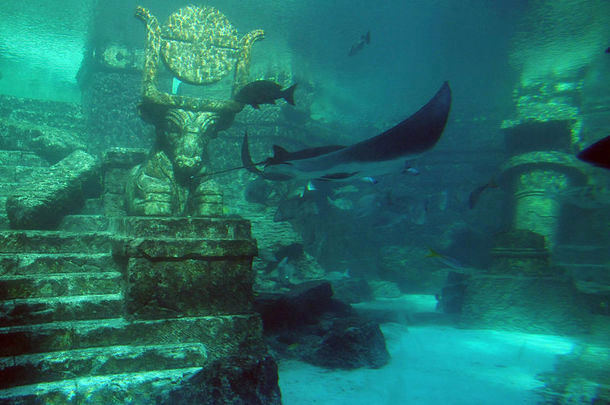
Shi Cheng also known as the Lion City, named in honour of the surrounding Lion Mountains, was once a centre of politics and economics in the eastern province of Zhejiang. In 1959, the Chinese government undertook a project to build a hydroelectric power station in the area. 290,000 people were relocated and 1300 villages plus 2 ancient cities flooded, by building a dam and slowly filling it with water. This manmade waterbody is called Qiandao Lake, or Thousand Island Lake, as a result of the 1078 islands which can now be found in the 573 square kilometres of fresh water.
The birth of the Lion City dates back to the Tang Dynasty and it is believed to have been constructed around 621 AD. Larger than most of the other cities of the era, it was built with 5 gates and towers instead of the usual 4. The structures which were built during this period, including traditional Chinese statues, have mostly been beautifully preserved as a result of the water it sits in.
After being flooded, the Lion City was forgotten and remained so for 53 years. In 2001, it was rediscovered completely intact by divers, and the way to the ruins mapped out. Affectionately called China’s Atlantis, the city has a maze of white temples, memorial arches, roads, houses, and remnants of the trees that grew while it was above the water. Away from the sun and wind, even the wooden structures in the city have been frozen in time preserving its original essence.
 The entire city lies between 85 and 131 feet underwater, and has become a popular tourist attraction with many guided dive tours available each week. After its rediscovery, wooden beams from the city were removed and became dehydrated and shrank. Protective measures have since been put in place in order to ensure that the ruins aren’t damaged by visitors and, in January 2011, the city was declared a historical relic under the protection of Zhejiang Province.
There is a big difference between the lake dive to view the underwater spectacle and a regular ocean dive. The visibility beneath the water is poor and unpredictable due to the silt at the bottom, and many divers find it disorientating. Not paying close attention while on a dive means that they may become separated, and tourists are urged to take the necessary precautions. Dive lights are mandatory and the first glimpse of the city is amazing as the structures appear suddenly out of the darkness. The lake’s water magnifies the exquisite carvings of animals and Chinese characters, and exploring the city as it is now is definitely a more memorable experience than walking through its streets while it was unsubmerged would have been.
 The depths of the seas are phenomenally different from life on land, both in atmosphere and life forms. Being unable to breathe under water, however, means that most of us will never get a chance to spend a night surrounded by beautiful sea creatures. These 5 underwater hotels have found ways of making it possible and individuals are now able to spend the night creating waves in their dreams:
- Jules Undersea Lodge
Located in Key Largo, Florida, this hotel was named in honour of the book Twenty Thousand Leagues Under the Sea, and is the oldest underwater hotel in the world. It resides 21 feet below sea level, and visitors can only access it by scuba diving into the foyer. The site was initially a research lab, which was then turned into a hotel. The nightly cost of a room at the Jules is U$800.
- Lover’s Deep
Converted from a submarine, Lover’s Deep is a mobile underwater hotel which can be found in and around various Caribbean islands, including St. Lucia. The luxury hotel experience is inclusive of staff members, such as the captain, a butler and a chef whose quarters are located on the other side of the submarine. This once in a lifetime experience, spending a night submerged off the coast of the Caribbean, costs approximately £175,000; a small price to pay for waking up under the ocean, but still feeling on top of the world.
- Lime Spa
Located in Huvafen Fushi, in the Maldives, this underwater spa and hotel has a view of beautiful rainbow coral, and the creatures that reside in it, from each room. In addition to sleeping below the seas a Lime Light Ritual, costing U$485, is a favourite for visitors and includes a coconut oil massage, steamy lime food treatment and an ice facial.
- Utter Inn Hotel
These rooms are located in Vasteras, Sweden, near Lake Malaren. The accommodation is known for its quirky style, vs luxury, and this is reflected in the price. £200 per night still provides a unique experience, however, and guests love the panoramic windows as well as the red and white wooden deck where they can relax and absorb the sun.
-
 Atlantis the Palm

This hotel has underwater suites and activities fit for kings, queens, princes and princesses. Located in the thriving city of Dubai, these rooms come with a giant aquarium in the middle, and their aim is to provide you with a luxurious vacation that will be remembered for a lifetime. The average cost of a room at the Atlantis the Palm is £5,500 per night, but upgrading to the Neptune room is an option for the ultimate underwater experience.
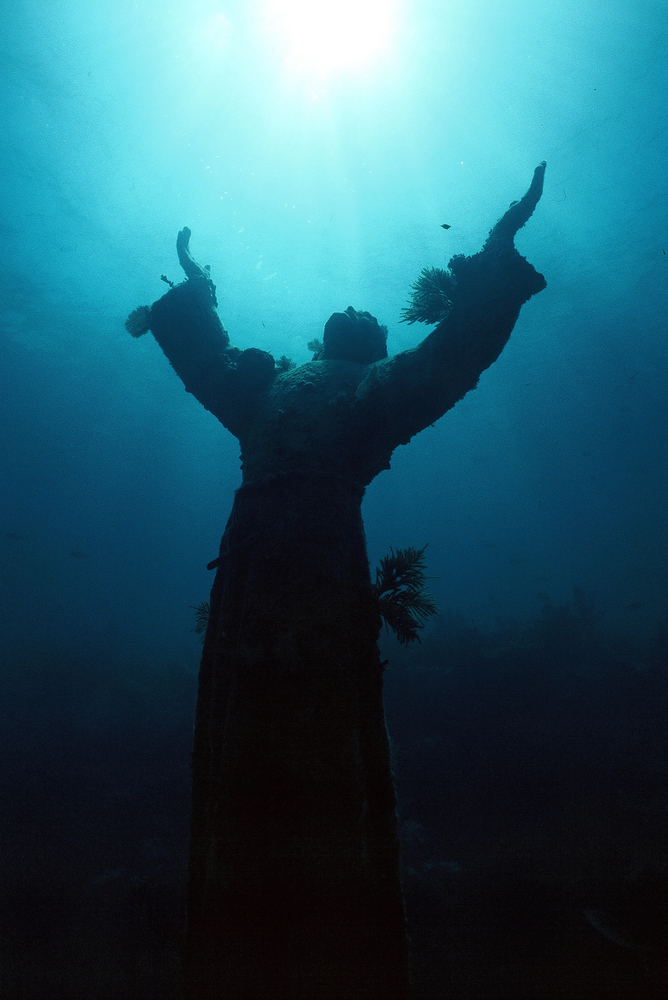 Throughout history there have been an unbelievable number of statues of Jesus Christ erected all over the world. Worshippers feel encouraged by seeing the son of God depicted in stone, marble, and various metals. The original Christ of the Abyss statue is a bit different from many of the others viewed in and around the world’s holy places, and was made with this intention. Sculpted from bronze, it can be found immersed in the Mediterranean Sea off San Fruttuoso, and between Camogli and Portofino on the Italian Riviera. The statue was placed under the sea on August 22, 1954, and is located approximately 15m below sea level.
The Christ of the Abyss was made at the suggestion of Italian diver Duilio Marcante in honour of his friend, Dario Gonzatti, who died while diving on the same spot a few years before. Sculpted by Guido Galleti, the statue is about 2.5m tall and weighs 260kg without the foundation. It was designed and made with its arms raised in order to invite blessings, as well as to show reverence. When Marcante himself died, in 1985, a plaque was added at the base of the statue in his memory.
The bronze figure is a very popular tourist attraction and the village of San Fruttuoso organises dive tours for visitors to the area. The simplicity of the dive is welcoming as the statue is located near the bay and in very shallow water. In order to preserve the Christ of the Abyss, so that visitors can appreciate its beauty, it is regularly restored to prevent corrosion and fouling. Apart from an unfortunate incident, where one of the statue’s hands was hit off by an anchor (but has since been reattached) the statue has maintained its early appearance and tourists are able to observe its original beauty. Within close proximity is a sunken British ship from the Crimean war, so tours incorporate both attractions at the same time.
 For visitors to the village who are not willing, or able, to make the dive but would still like to see the statue, there is a replica in the Church of San Fruttuoso. Other copies have been made and are displayed in various areas of the world, both in the water and on land. The original mould was used to create one in Grenada off St. George’s coast, as well as one in the United States 25ft off the coast of Key Largo in Florida. Starting in a small village, as a gesture to a friend’s memory, the Christ of the Abyss has extended into a worldwide object of great interest and both the original and the replicas are marvelled at daily.
Centuries of trade and looting mean that the amount of treasure that lies below the oceans, and other water bodies, is unknown and the vast majority of it will probably never be recovered. There are many diving expeditions that search for known shipwrecks, hoping to find their contents for both the monetary as well the historical value. To date the three largest treasures ever discovered under the sea are:
- The Whydah Galley
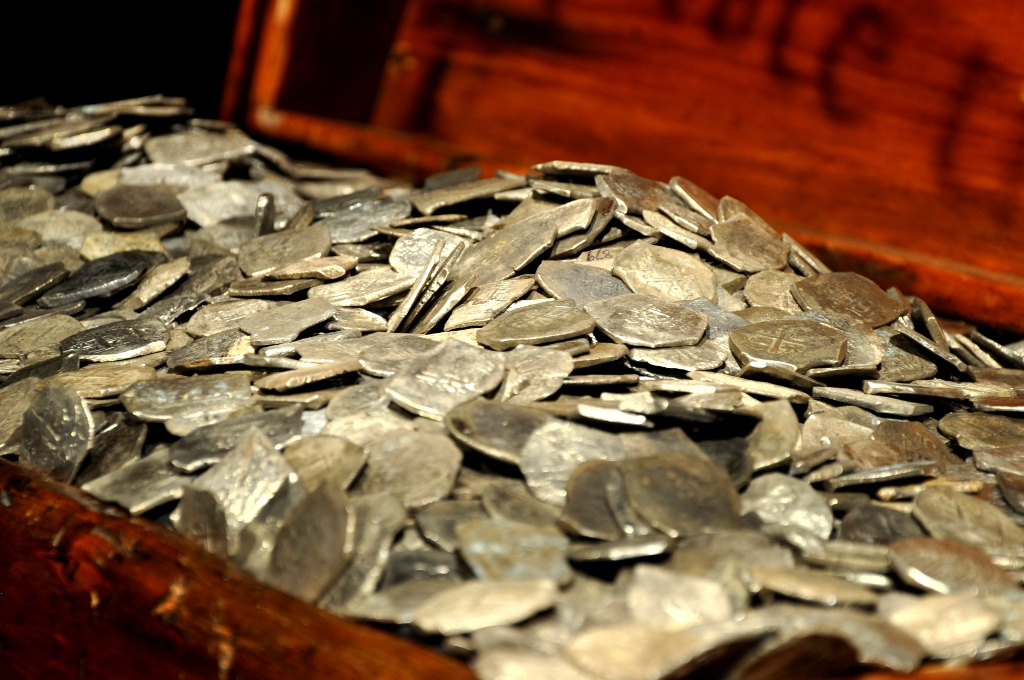
By Theodore Scott – Flickr: Look At That Booty, CC BY 2.0, https://commons.wikimedia.org/w/index.php?curid=22019309
The loot recovered from this ship is estimated to be worth U$400 million, and counting. The Whydah Galley was a pirate ship belonging to Captain ‘Black Sam’ Bellamy, who was the wealthiest pirate the world has ever known. The Whydah Galley had originally been a slave ship which the Captain captured. He gave the survivors the ship that he had arrived on, and took over the Whydah as his flagship. Eventually, it sank with a large amount of stolen cargo on board which remained lost for a long time.
In 1984, it was relocated by Barry Clifford after many years of searching, and the recovery of the ship’s treasures began. Even though a significant number of items are still being found at the dive site, over 200,000 have already been taken out including gold, jewellery, cannons and coins. These are displayed around the world in an immensely popular National Geographic Society exhibition entitled ‘Real Pirates’
- The Nuestra Senora de Atocha
 In preparation for its journey back to Spain, this trade ship took two months to load before it could set off. Unfortunately, a short time later it sank near the Florida Keys in 1622 with its cargo consisting of gold, silver, jewels and indigo. Despite numerous efforts, that lasted many years, the Spanish were unable to recover it.
In July 1985, Mel Fisher’s 17 year search finally proved successful when he discovered its location. 20 years later the cargo is still being brought to the shore, but U$450 million worth of treasure has already been recovered.
- The Black Swan Project

Benjamín Núñez González
The US Odyssey Marine Exploration has made many amazing dive finds, but their greatest is by far the recovery of a ship in 2007. The project was called the Black Swan Project and they secretly flew 17 tons of coins from Gibraltar to the United States. The Spanish government filed a claim to the treasure on the grounds that the discovery had been the cargo from the Nuestra Senora de las Mercedes, which sunk off the coast of Portugal.
After being brought in to investigate the origin of the coins, experts were more astonished at the size of the recovery than anything else. After 5 years of dispute the treasure was rewarded to the Spanish government, and most of it is now displayed in museums throughout the country. The estimated value of the coins, which have been recovered from this project, is a mind-blowing U$500 million.
John D MacDonald’s character Travis McGee has been a big influence on my MacTravis adventure series. Here’s a little background information on John D MacDonald.
 Born in Sharon, Pennsylvania on July 14, 1916, John left the state at an early age, moving to Utica, New York in 1926 with the rest of his family. After his first trip to Europe in 1934, he developed a love for travelling, photography and the unknown. After his return to the States, MacDonald started going to the Wharton School of the University of Pennsylvania, but surprised everybody by dropping out. He worked menial jobs for a short while, before restarting his tertiary education at Syracuse University. He met the love of his life while at school, Dorothy Prentiss, who he married in 1937.
After receiving an MBA at Harvard in 1939, MacDonald joined the army and served as an officer between 1940 and 1945. In his last year of service he wrote a short story and mailed it to his wife. Dorothy submitted it to a popular magazine and received US$25 for the contribution (a substantial amount for a story at the time). Encouraged by the success of this first story MacDonald spent four months after he was discharged writing more. These he submitted to different magazines, until one was accepted by the pulp magazine Dime Detective. He continued developing his short stories and sold close to 500 in different genres, many written under pseudonyms.
MacDonald’s first novel was published in 1950, The Brass Cupcake, and he also had some very successful sci-fi books including Wine of the Dreamers. This expanded into the crime thriller genre and these works are still considered to be in a class of their own. He was an expert at delving into the minds of psychopaths, astonishing readers with his in-depth knowledge of the way their sick minds functioned. His writing style is still considered to be one of the most distinctive in the genre, and few authors have been able to match his ability to create such gripping villains.
 Even though all his writing is immensely popular, John really revealed his astounding literary genius when he developed the unforgettable character Travis McGee. Over 21 years (1964-1985) he wrote an entire series, which followed the adventures and accomplishments of this talented, sophisticated, unconventional sleuth. McGee lived on a boat, increased his wealth by keeping half of the stolen goods he recovered, worked with a sidekick, flaunted his intelligence and showed his love for the companionship of many different females. Travis McGee is the character that every man wants to be, and every woman wants to be with.
After a long and successful career, John D. Macdonald died on December 28, 1986 in St Mary’s Hospital, Milwaukee. His death was due to complications resulting from a heart bypass. Many of his novels have been adapted into films including two based on the Travis McGee series. Writers continue to use MacDonald’s work as inspiration, as his stories have achieved levels that most authors can only dream about.



 Steven Becker