
 In 1803, the first ruler of Haiti created a new flag. He ripped out the white stripe in the French red, white and blue flag and proclaimed to the world that he would rip white people from the nation. The remaining blue and red stripes would forever be known as the flag of Haiti.
That man was Jean-Jacques Dessalines, the first ruler of Haiti.
Born in 1758, in Africa, Jean-Jacques Dessalines was enslaved in the French colony of Saint-Domingue. He later served as a lieutenant under Toussaint L’Ouverture after the 1791 slave revolt, and later, helped eliminate French control over Haiti. Dessalines renamed the colony Haiti in 1804 and declared himself its first emperor. Although he was despised for his brutality, he was—and still is—honored as one of Haiti’s founding fathers. Eventually, he was killed in a revolt on October 17, 1806, in Pont Rouge, near Port-au-Prince, Haiti.
 During his reign as emperor, Dessalines took drastic measures that he felt necessary for Haiti to stay independent. He enforced a system of forced labor to prevent Haiti from reverting back to a subsistence economy. To eliminate rule by whites, he confiscated their land and made it illegal for them to own property. Probably his most extreme measure was a campaign to eliminate the white population of Haiti. Between February and April, 1804, Dessalines ordered the deaths of approximately 5,000 white people of all ages and all genders.
Dessalines also tried to implement reforms to improve the economy of Haiti. He enforced a tight regulation of foreign trade, and favored commerce with Great Britain and the United States over his old enemy, France. He placed well-educated Haitians, primarily mulattos, into key positions in his administration, and the tiny empire flourished due to his wise decision making.
The exact circumstances of Dessalines death are still unknown. What is known is that people of all classes were upset with his draconian labor and agricultural policies including the peasants, the fair-skinned elite and the military. He was killed on October 17, 1806, possibly in an ambush led by Alexandre Pétion and Henri Christophe, who later split the country in two and ruled each section separately.
Despite his violent reign, Dessalines lives on as a figure of pride for Haitians. The day of his death, October 17, is a national holiday in Haiti. Dessalines’s legacy is embodied in Haiti’s national anthem, “La Dessalinienne.”
Hi all,
During my January sale you’ve had the chance to download Relic (Mac Travis Series #1) and Pirate (Tides of Fortune #1). This week it’s the time for a lesser known series that I’ve been writing featuring a character called Will Service. Bonefish Blues is available to download for just $0.99 until 17 January. One more discounted book will be available from next week. If you like Bonefish Blues, Will’s adventures continue in Tuna Tango, also available on amazon.

11 January – 17 January
$0.99

Key Largo
Key Largo (which means Long Key, named by the Spaniards) is one of the closest of the islands to the Florida mainland. Drive south from Miami for about an hour or so, and you will come to the drawbridge at Jewfish Creek. When you cross this bridge, you will find yourself in Key Largo, the first island of the Florida Keys.
 Key Largo is the home to the world’s largest artificial reef, the 510-foot USS Spiegel Grove; the John Pennekamp Coral Reef Underwater State Park, and the very famous Christ of the Abyss underwater statue. Key Largo is best known for its shallow reefs and deep wrecks. The shallow reefs provide world class diving for scuba divers of all ages and skills. The deep wrecks offer the some of the best wreck diving found anywhere. The magnificent natural coral reefs a few miles offshore are world renowned for their beauty. Underwater treasures await divers and snorkelers who enjoy the colorful, tranquil sealife in these clear, tepid, azure waters. Visitors to Key Largo quickly understand why it is billed as the “Dive Capital of the World.”
Islamorada
Islamorada is actually a “village” of four islands, which include Plantation Key, Windley Key, Upper and Lower Matecumbe Keys, and Long Key. The four islands offer numerous tranquil spots to relax under the sun by day, and then live it up late at night at a beachfront party.
The blue waters off Islamorada offer choice wreck diving. Many reefs are only ten to twenty feet deep and make for fantastic snorkeling and shallow dives. Scuba divers and snorkelers can enjoy the Eagle, Davis, Conch, Alligator and Pickles reefs, Crocker Wall, and the aquarium and fish bowl.
The Islamorada area also features watersports rentals, tennis facilities, bicycle trails, historic hikes, beautiful vistas of both the Atlantic Ocean and Florida Bay, and opportunities to swim with dolphins and stingrays.
 Marathon
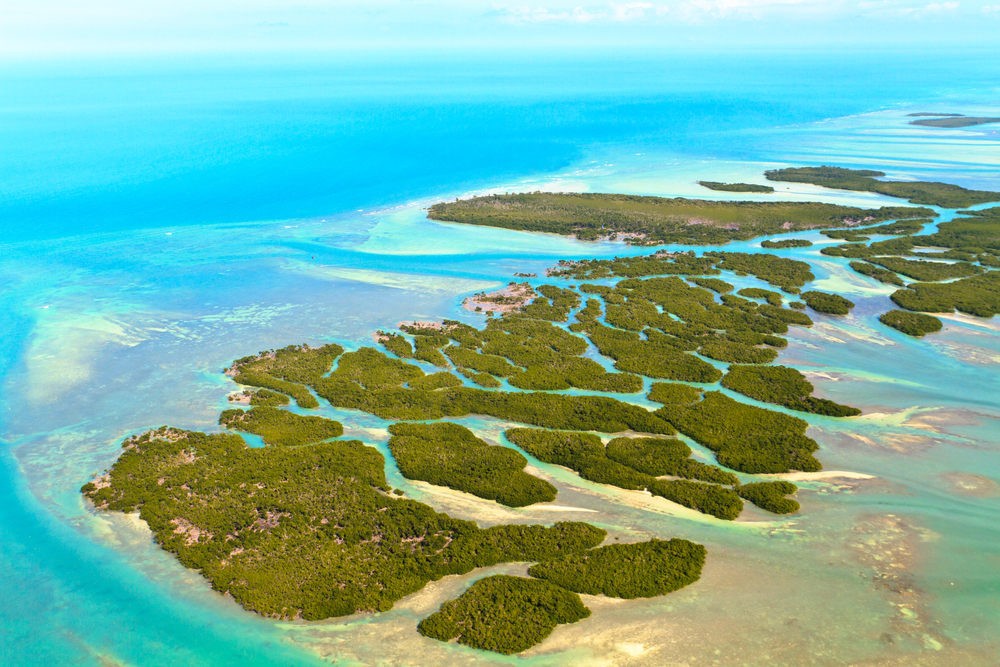
Marathon is situated at the mid-point of the Florida Keys island chain, which is why locals have declared their home “The Heart of the Keys.” It’s approximately fifty miles north of Key West and fifty miles south of Key Largo, making it one of the very best vacation destinations for diving and seafront recreation.
Talking about divers, there are plenty of coral reefs, wrecks, and drops just minutes offshore. Marathon is home to two of the greatest reefs in the Atlantic: Sombrero Reef and Looe Key. Marathon has spectacular diving for all skill ranges, such as deep drop-offs carved by the Gulf Stream for the experienced open-water diver, and miles of living reefs for those seeking relaxing dives or snorkel trips. Sombrero Reef, one of the most beautiful sections of America’s only living coral barrier reef, lies just several miles offshore and is protected by the Florida Keys National Marine Sanctuary. At Sombrero Beach, you’ll find a long, beautiful sandy beach and gorgeous palm-covered patios that are a great place to view the evening sunsets after a day of island living, diving and seafront living. It is also good to know that Marathon has the largest continuous live coral reef system in the Florida Keys.
Of the 42 bridges that connect the Florida Keys, the 7-mile bridge is the longest and can be found on the south side of Marathon. This is a must-visit for all who travel to Marathon.
Hi all,
So, we’re now into 2016 and I’ve got lots of plans this year and several new books scheduled.
Last week was the first week in my January sale. Relic was available to download for just $0.99, but as that one ends, another begins. This week it’s Pirate – Book 1 in the Tides of Fortune series. The promotion starts today (4 January) and ends on 11 January. Take advantage of this great opportunity to download a bestselling book at a bargain price.
4 January – 11 January
$0.99
Tortuga or Turtle Island (presently known as Ile de la Tortue and located off the northwest shore of present day Haiti on the Island of Hispaniola), Tortuga is approximately 20 miles long and no more than 4 miles wide, and at one time, held the reputation of the home of pirates.
 Tortuga was first discovered and named by the Spanish. The name Tortuga actually means Sea Turtle. It was named this way because the island resembles a large turtle. Despite its immediate proximity to Hispaniola, an island claimed by Spain at the time of Columbus, the French decided to establish a settlement of sorts on the island in 1625. Most of the settlers came from the nearby French colonies of St. Kitts and Nevis.
The Spaniards were displeased with the influx of French settlers bordering on their territory and tried to dislodge them. The first of these attacks was in 1629 and was only marginally successful. Many of the colonists were true buccaneers, hunters of wild ox and pigs. Rather than fight the Spaniards in open combat, they fell back across the narrow channel and began hunting on the northern coast of Hispaniola.
The Spaniards then built a fort on Tortuga. Realizing they had only chased the French over to Hispaniola, the Spaniards left the fort with a small garrison to protect it and headed off in pursuit of the buccaneers. The lightly held fort was then easily taken by the buccaneers in a counter attack, and the French set about improving the fortifications. The island would remain a French colony from then on, despite repeated attacks by the Spaniards.
Strategically, Tortuga was one of the most important islands for France. To the northeast of Tortuga is Cuba, the last stop of the Treasure Fleet before returning to Spain. France, like most of Europe, was at war with Spain for most of the 1600s. Tortuga became a perfect spot to ambush the returning Spanish fleets.
The French governors of Tortuga would, for a price, offer safe harbor to just about any ship that wasn’t Spanish. They were also entrusted with the powers to offer Letters of Marque to privateers and weren’t too picky about the nationality of the crew as long as they agreed to attack Spanish ships and split the booty with them. As such, Tortuga quickly became known as the home of the Brethren of the Coast.
At around this same time, Anthony Hilton, an Englishman, set up an English colony on the island. The English and the French on Tortuga were, at first, allies against the greater enemy, Spain. This, however, was short lived as the two start fighting over the imported slaves on the island. When the Spaniards got word of this, they decided to attack Tortuga and wipe out the divided intruders. They managed to wipe out the English colony, but the French and the English survivors once again fled the island.
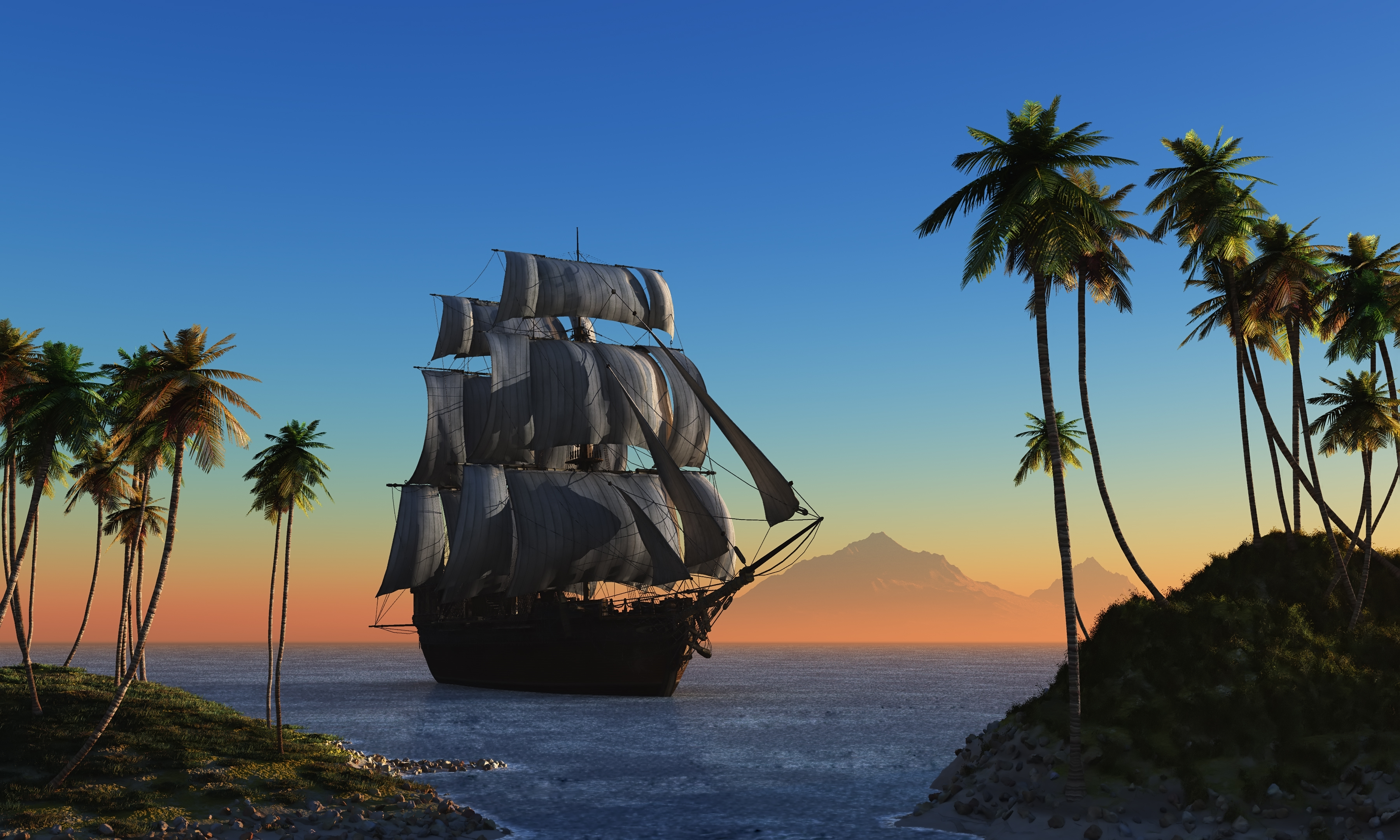 It seems like Tortuga really had nothing for the Spaniards because once again, as soon as they had driven the French and English from the island, the Spaniards left. As the Spaniards left, the buccaneers again returned to wreak havoc.
By now, the buccaneers were attempting to raise sugar cane and tobacco. When not raising crops, they were attacking the Spanish fleets. By 1641, the French colony has become so well established that the French sent Jean Le Vasseur to take control of the island. Le Vasseur managed to expel the English colony. The British plantation became French in name but most of the population of Tortuga was made of pirates, and they remained on the island with the blessing of the French Government. The pirate fleets offered both protection and income to the small colony. Most of the pirates were either English or French. In order to keep the pirates happy and around, the French governor imported hundreds of prostitutes.
By this time, the pirate community was firmly established on Tortuga and enjoyed the support of the French Government. Pirates of all nationalities were free to roam the seas around Tortuga under loosely written Letters of Reprisal against the Spanish government. Eventually this was frowned upon, and the French made efforts to weed their privateer ranks of Dutch Freebooters and English privateers. The man primarily responsible for this was Governor Monsieur D’Ogeron. The English in turn headed for Jamaica and safe harbor, while the Dutch headed off to the Virgin Islands, primarily St. Thomas.
Among the notable pirates to have ventured into Tortuga is none other than Henry Morgan who arrived there in 1660 as an indentured servant. He soon deserted a cruel boss and joined the ranks of buccaneers, later moving his base of operation to Jamaica.
Among the French pirates was none other than Jean David L’Ollonais, probably one of the cruelest men to ever hold a cutlass in his hand.
In 1670, Henry Morgan accepted French Letters of Commission, and he actively promoted the island of Tortuga as a base of operations and for the disposal of booty. In that year, 500 buccaneers from Tortuga and 1000 buccaneers from Jamaica, under the command of Henry Morgan, set out to pillage and plunder “legally” with a Letter of Marque. They attacked Santa Marta, Rio de la Hacha, Puerto Bello and Panama. Morgan received a formal vote of thanks from the Council of Jamaica in May of 1671 for his activities.
By the 1680s, laws were made that English seamen sailing under foreign flags were traitors to the throne, and pirates. Several Englishmen sailing from Tortuga under French Letters of Marque were convicted and hanged for piracy after attacking Dutch ships. When the Spanish gold began to dwindle, the buccaneers turned their attention to Jamaican plantations and English merchant ships. This led to protests from the English government to the king of France. Eventually, the buccaneers were privateers only in name and attacked anything that wasn’t French. The governor-general of the French Colonies attempted to bring the buccaneers under control but failed.
Finally, in 1684, the Treaty of Ratisbone was signed which formally ended hostility between France and Spain. With the treaty came the withdrawal of all Letters of Marque. From that point on, the buccaneers who continued attacks were pirates and were quickly hanged. Many of the former privateers were employed by the government of France to hunt down their former Brethren of the Coast.
While piracy would continue in and around Tortuga for years to come, it no longer enjoyed the status as a Home of the Buccaneers. The pirates found that life was easier in the Bahamas.
Hi all,
I hope you’ve had a great Christmas. 2016 is just around the corner and I have some great deals to offer you during January. Each week I will be promoting one of my books at the amazing price of just $0.99! Take advantage of this great opportunity to download a bestselling book at a bargain price.
So – kicking off the first week is the first book in the Mac Travis Adventure series. The promotion starts today (28 December) and ends 3 January.
28 December – 3 January
$0.99
Hendrick Quintor, a free black man of African and Dutch descent, was considered to be one of the most dangerous pirates of the 1700s. He served on the Whydah with distinction, but few know the story of how his legendary ship, the Whydah, and he, along with the rest of his damned crew, were destroyed.
The Whydah left on her maiden voyage in early 1716, travelling out the English Channel and into the Atlantic, where she then turned south toward Africa. Like other slave ships, she worked her way around the West African coast from modern Gambia and Senegal to Nigeria and Benin, picking up captives along the way. Eventually, she landed in Ouidah (wee-dah)—the slave port from which the Whydah had taken her name.
 In late February 1717, Whydah, now under the command of Captain Lawrence Prince, a former buccaneer under Sir Henry Morgan, was navigating the Windward Passage between Cuba and Hispaniola when it was attacked by pirates led by “Black Sam” Bellamy. At the time of Whydah ’s capture, Bellamy was in possession of two vessels: the 26-gun galley Sultana and the converted 10-gun sloop Mary Anne. After a three-day chase, Prince surrendered his ship near the Bahamas with only a desultory exchange of cannon fire.
Bellamy decided to take Whydah as his new flagship; several of its crew remained with their ship and joined the pirate gang. Pirate recruitment was most effective among the unemployed, escaped bondsmen, and transported criminals, as the high seas made for an instant leveling of class distinctions.
In a gesture of goodwill toward Captain Prince who had surrendered without a struggle—and who, in any case, may have been favorably known by reputation to the pirate crew—Bellamy gave Sultana to Prince, along with £20 in silver and gold.
The evening of April 26, 1717 was the same as any other evening—apart from the dense fog that had rolled in. An arctic gale had collided with a warm front moving up towards Canada from the Caribbean, and their confluence produced one of the worst storms ever to hit Cape Cod. As the pirate sailed through Cape Cod, the storm hit the ship with full force. The Whydah was run aground on a sandbar and the mainmast and rigging were snapped. The Whydah rolled over, and most of those on board were killed in the bitter cold of the ocean—even though the beach was only a mere 500 feet away.
Two men survived that night out of 146 who had set sail on the doomed boat.
Quintor himself was not aboard the Whydah when she sank in that night in 1717. He was captured later that year and found guilty of piracy. He was sentenced to death by hanging. His long reign of terror had ended, and the town square was filled for his hanging. As he choked on the rope, the crowd cheered.
 Born in 1460 in San Tervas de Campos, Spain, Juan Ponce de Leon was the first conquistador to discover Florida.
Leon sailed with renowned explorer Christopher Columbus on his second journey to the Americas. He settled with his family on the Caribbean island then known as Hispaniola, now known as Dominican Republic. He became a military commander and later rose to the rank of deputy governor.
In the early 1500’s, Leon discovered a nearby island called Borinquen. On that island, he found deposits of gold and later returned to colonize the island under orders from the king of Spain. This island became known as Puerto Rico, and Leon was named governor, a post which he kept until he was replaced by the son of Christopher Columbus at the orders of the king.
Disgusted by the king’s decision, Leon decided to discover new lands in the new world. He sailed through the Bahamas and from locals heard of a mythical fountain of youth. In his desperation to find this unique treasure, he completely explored the Bahamas and Bimini looking for the fountain of youth—and gold—but found neither.
He decided to continue his exploration, and in late March 1514, his ships landed on Florida’s east coast near present day St. Augustine. He claimed this land in the name of Spain and discovered the lavish landscape, dramatic beaches and called it La Florida, which means “place of flowers” in Spanish.
 Next, he continued down the coast and along the Keys. He arrived at an island filled with turtles and named it Dry Tortugas because there were no sources of fresh water on the island.
As he continued to explore the west coast of Florida, Ponce de Leon entered the Charlotte Harbor area and along with his men, explored inland for water and wood. They discovered a Calusa tribal village at Mound Key. This unfriendly tribe of Indians drove the explorers back to their ships. From there, they headed back to Puerto Rico.
It wasn’t until 1521 that Ponce de Leon returned to Florida to build a colony. He landed on the beaches with over 250 settlers, tools, seeds and horses. As the settlers went inland for water, the Calusa ambushed them. Leon was shot in the thigh and wounded. The remaining settlers elected to return to Cuba and abandoned the settlement. Leon soon died from his wounds—and the fountain of youth was never discovered.
 Haiti has been blessed with fleeting moments of glory. From its discovery by Christopher Columbus in 1492, it was one of the first islands in the New World to be settled by the Spanish. Between 1492 and 1550, the indigenous culture of the Taino Indians disappeared, and the island became a lawless pocket in the Spanish empire, populated by all manner of castaways, pirates, buccaneers and fortune seekers. When the French used the buccaneers as mercenaries in a war against the Spanish, Spain was forced to sign the Treaty of Ryswick in favor of the French. The treaty gave the western third of the island to the French, and that third became Saint Dominigue. Before long, the colony became on the richest in the world—known as “Jewel of the Antilles.”
Revolution came to the island in 1789. With a half-million slaves, twenty thousand free blacks and nearly 40,000 white planters, slave drivers and landholders, the island was a hot bed for insurrection. Thirteen years of war saw a thousand plantations razed to the ground. English, Spanish and French armies fought for control of the colony. The superpowers of the time militarized the slaves, and as all on the island fought, destroyed, plotted and played, mayhem emerged.
 The last of the European troops were defeated in 1804, and the rebel generals and their coalition of slaves declared independence. The colony became the second in the western hemisphere to do so.
From the highs of an early 18th century kingdom ruled by Henri Christophe, which thrived in the north, to the lows of the sacks of Port-au-Prince by rebels backed by western businessmen—by the time the U.S. Marines started a nineteen year occupation of the country, the former colony was one of the poorest nations on earth.



 Steven Becker