
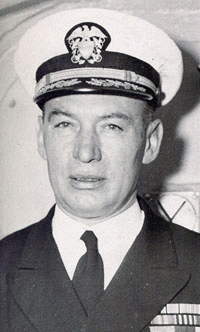
 The CIA was started in 1947 with Rear Admiral Roscoe H Hillenkoetter as its first director. The purpose of the agency is to protect the country from overseas threats and attacks, by gathering national security information worldwide. Even though both Congress and the President have influence over the CIA, it is the President that has the ultimate authority and gives the go ahead to initiate covert actions.
Covert operations are normally conducted by the CIA in an effort to protect the country, or affect circumstances which might have direct effects on its population. They are undertaken without revealing the identity of the agency or country involved. These operations as well as others require an entire team to ensure that they are carried out properly.
To become a part of the CIA there are three basic requirements, which are: those applying must be at least 18 years old, a US citizen and a high school graduate. For intelligence analysts, overseas officers and non-clerical personnel a college degree, preferably at a higher level, is also a requirement. Knowledge of a foreign language is always an additional benefit, no matter where in the agency you would like to be employed. Many of the people employed by the CIA work undercover, either with another government agency or as civilians that seem to be in no way affiliated with the government.
Operations officers in the CIA are responsible for seeking out spies, and being based in other countries is very likely during their employment. Best suited to this job are individuals that have a forceful personality, because other parties may need to be convinced to cooperate. Keen intellectual ability, a tough mind, high integrity, love of country and a significant amount of courage are other necessary requirements.
Operations Officers are a part of the Directorate of Operations, which deals directly with human source intelligence (HUMINT). These are the most useful resources to gather information on terrorism and weapons distribution. This greatly helps in the ‘War on Terrorism’ that is a significant part of the CIA’s responsibilities.
 The DO is one of five directorates that form the CIA. The other four are:
Directorate of Analysis – These employees go through and interpret the information that is received and make reports and briefings, as well as write papers related to these.
Directorate of Digital Innovation – This directorate is in charge of accelerating the innovative technology of the agency as quickly as possible.
Directorate of Support – The support provided by this directorate include medical services, financial management and agency facilities, as well as anything else that may be needed to ensure that it is being run as smoothly as possible.
Directorate of Science and Technology – In charge of ensuring that all the technology of the agency is as up-to-date as possible. This includes ensuring that its members are forward thinking and able to carry out the assigned missions.
The CIA keeps the number of people it employs confidential, but is very happy to receive applications from those who are enthusiastic about joining their ranks.

My latest book, Storm Rising, is available now.
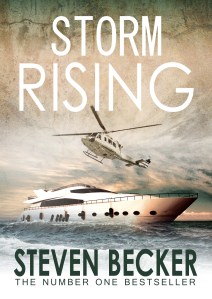 Storm Rising

“After being outwitted by an Iranian spy in London, CIA agent Mako Storm finds himself in dire straits. The trail for redemption leads Storm to the British Virgin Islands and an uncomfortable alliance with a man from his past. When they discover an old nemesis – a beautiful Chinese woman is involved, a terrifying plot to rebuild the blood thirsty Persian empire begins to unfold.”
Only one thing stands between the empire and a new world order – American agent Mako Storm.
Available on Kindle

Download the first three chapters of Storm Rising today!

The British Virgin Islands is a great vacation spot because of its warm climate and lush vegetation. Wherever you find these conditions, there are sure to be many animals that thrive in them. Even though some of them have excellent camouflage skills, opportunities have been taken to gather some information on them. Like many other islands much of the animal population of the British Virgin Islands consists of amphibians and reptiles. Some of these are:
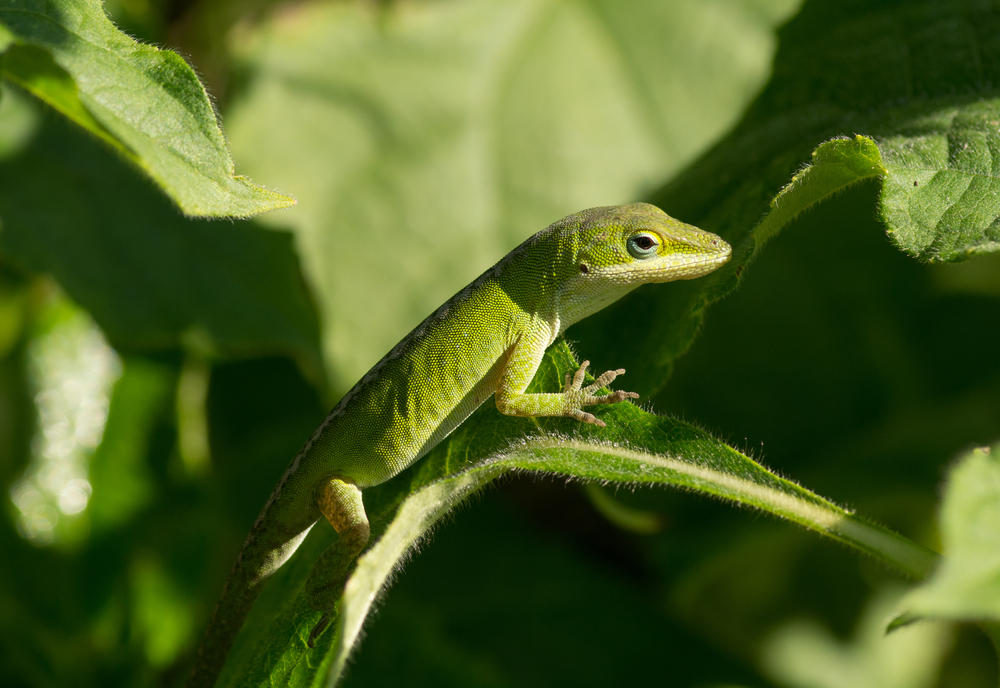 Anole Lizard
As a master of disguise the anole lizard camouflages itself by blending in to its background. There are different kinds such as:
- Saddled Anole – Having a slim shape and pointed snout, this lizard has a dark mottled colour and resides in the relative safety area of the high tree limbs.
- Grass Anole– With a similar shape as the saddled anole, these little guys have a light greenish colour and a pale stripe on their sides. Like the name suggests, they live in grassy areas and bushes.
- Crested Anole – Also known as the ‘man lizard,’ the crested anole is adorned with spiked crowns and dewlaps, which are colourful throat fans that have a crimson border and yellow and green centre. Their main purpose is to scare off rivals and predators. The male also uses his to impress the females by throwing it out and then doing a few push-ups.
Southern Woodslave Gecko – Even though this gecko is a native of West Africa it is believed to have arrived on the island via slave ships, and can be found there in excess. These nocturnal creatures have bodies that are almost free of pigment, and they camouflage themselves due to their transparency. They choose to live in buildings, hiding behind wall art and other decorative items, and surfacing at night to catch prey. Their ability to cling to even the smoothest surface area comes as a result of flat toes which are crossed by lamellae that are tiny flaps of skin with hundreds of hooks that make it possible for them to latch on anywhere.
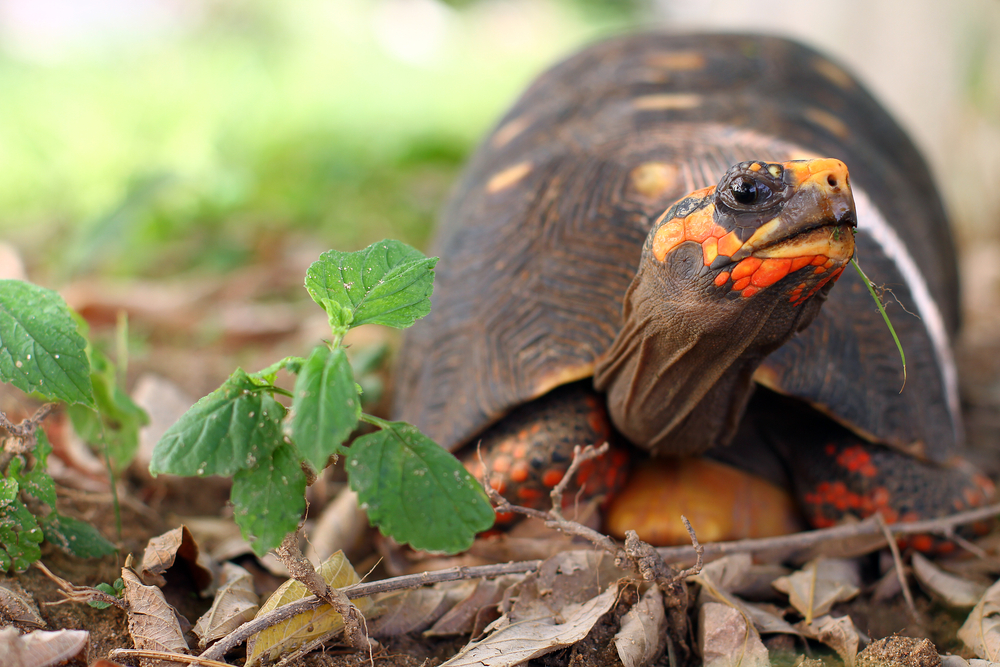 Red-foot Tortoise – This tortoise used to be spread throughout the island but is now found mainly in protected areas, such as Botanic Gardens and Guana Island, which is a private nature reserve. About two feet long, they have red spots on their feet and an orange area around the mouth. Their normal diet consists of fruit, leaves and flowers but is supplemented with lots of vegetables on the reserves.
A few of the other animals on the island are several species of iguanas, small snakes that are not dangerous, as well as native tree frogs that make chirping noises so that they are often mistaken for birds or insects.
 In his greatly documented Caribbean journeys that started in 1492, Christopher Columbus is given the credit of discovering many of the islands there. These include the Virgin Islands which he named in memory of the 11000 virgins who followed St. Ursula, and were beheaded in the 4th century. In 1692, they were colonised by the British and became fondly known as the British Virgin Islands, even though their official name remains the same.
The BVI is made up of 36 islands, with in excess of 20 still being unpopulated. Tortola is the largest one and has the most people living on it. The people of the islands speak a mix of English and creole (broken English). The population of the British Virgin Islands (like much of the Caribbean) is very diverse and they have their own unique culture and mannerisms.
The Unique Foods of the British Virgin Islands
A very important part of any country’s traditions is their food, and the way that it is different from other cultures. Even though the islands have started to import a lot of the things they eat, there are still local farmers who sell produce in open-air markets, including fruits, vegetables and animals that they have reared themselves. Some of the other traditional foods that are still a part of mealtimes are:
Fungi (Foon-gee) – This is the main staple in the islands and is made from cornmeal which has been boiled thick and mixed with okra. A popular, and highly recommended, meal is fungi and fried fish.
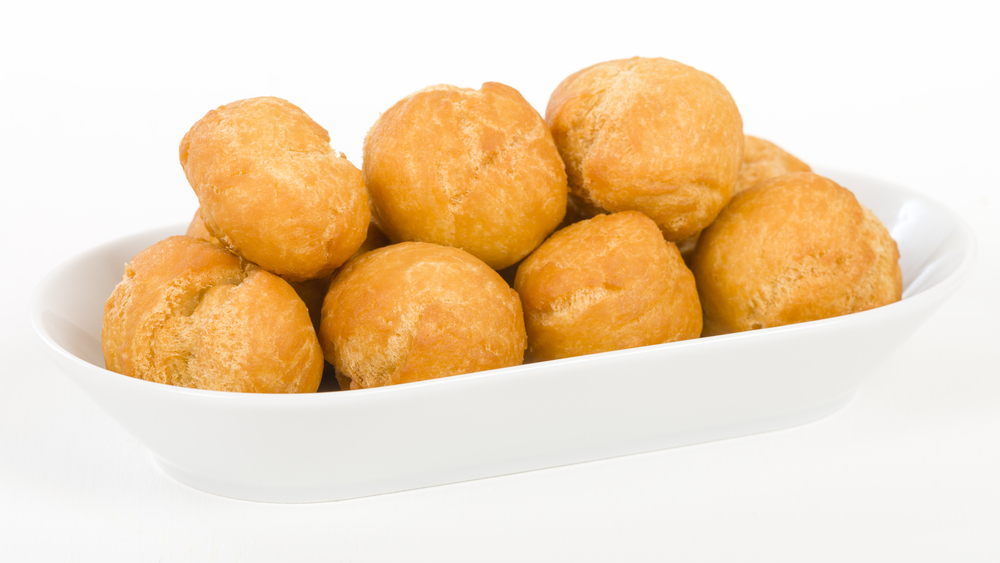 Pate (Pah-teh) – A fried dough that has been made with a meat filling, this is a dish that can be eaten as either a snack or a meal. The fillings are normally mutton (goat), chicken or saltfish.
Johnny/Journey Cake – Pastry made using a mix of sugar, cornmeal and fried dough.
Soups – In the British Virgin Islands there is an endless variety of soups, some of these include fish, bullfoot, goat head and pea soup. Always served with dumplings, they are well-seasoned with various spices.
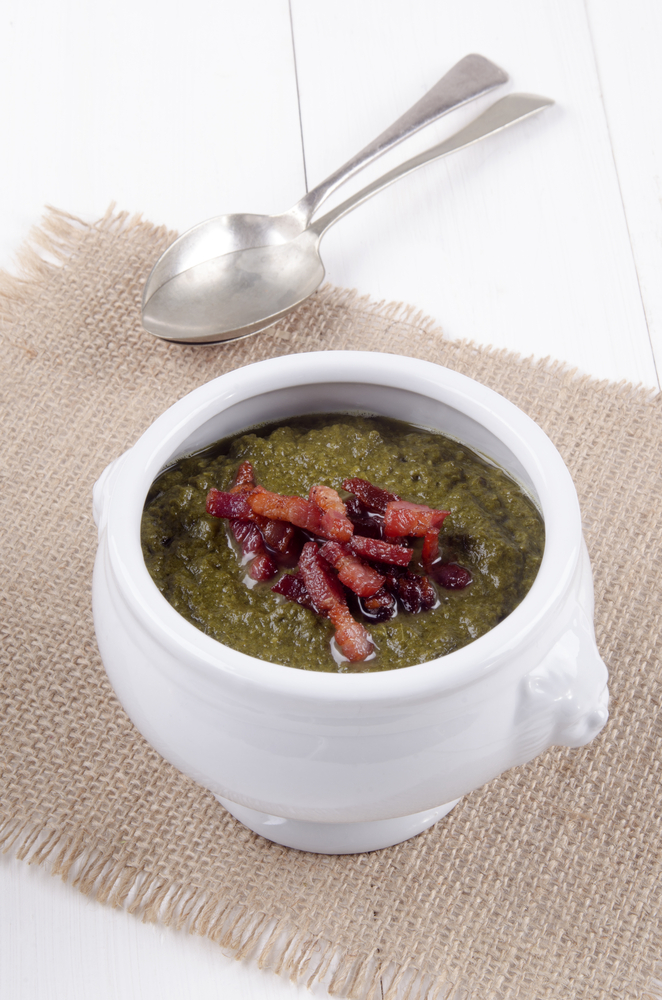 Callaloo – Another soup which is made from the green, leafy vegetable grown on the island with the same name. It is boiled down with meat and okra, until a thick stew is formed.
Dukuna – Normally reserved for special events, this is a dessert made from a combination of spiced sweet potatoes and coconut pudding which has been wrapped in plantain leaf and steamed.
Being located in the tropics the variety of fruits that are grown locally are endless. The most well-known are mangoes, sugar apples, soursop, gooseberries, sea grapes and papaya. These are all stewed with sugar and when cooled make a tasty sweet treat.
The British Virgin Islands is not only full of friendly inhabitants, they are the source of a unique variety of food that always leave visitors craving more.
Darius I was the third king of the Persian Achaemenid Empire. Also called Darius the Great, he ruled the empire at its very peak, when it included much of West Asia, the Caucasus, parts of the Balkans, most of the Black Sea coastal regions, parts of the North Caucasus, Central Asia, as far as the Indus Valley in the far east, and portions of north and northeast Africa including Egypt, eastern Libya and coastal Sudan.
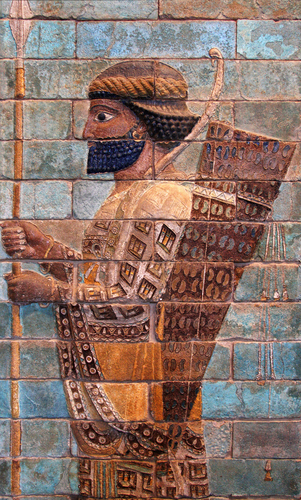 Darius ascended the throne by overthrowing Gaumata, the alleged usurper of Bardiya with the assistance of six other Persian noble families; Darius was crowned the following morning. The new king met with rebellions throughout his kingdom and quelled them each time. A major event in Darius’s life was his expedition to punish Athens and Eretria for their aid in the Ionian Revolt against subjugation in Greece. Although ultimately ending in failure at the Battle of Marathon, Darius succeeded in the re-subjugation of Thrace, expansion of the empire through the conquest of Macedon, the Cyclades, and the island of Naxos, and the sacking and enslavement of the city of Eretria.
Darius organized the empire by dividing it into provinces and placing satraps to govern it. He organized a new uniform monetary system, along with making Aramaic the official language of the empire. He also put the empire in better standing by building roads and introducing standard weights and measure. Through these changes, the empire was centralized and unified. Darius also worked on construction projects throughout the empire, focusing on Susa, Pasargadae, Persepolis, Babylon and Egypt. He had the cliff-face Behistun Inscription carved to record his conquests, an important testimony of the Old Persian language.
Darius’s European expedition was one of the major events of his reign, which began with the invasion of Thrace. Darius also conquered many cities of the northern Aegean, Paeonia, while Macedonia submitted voluntarily becoming a vassal kingdom. He then left Megabyzus to conquer Thrace, returning to Sardis to spend the winter. The Greeks living in Asia Minor and some of the Greek islands had submitted to Persian rule already by 510 BCE. Nonetheless, there were certain Greeks who were pro-Persian, although these were largely based in Athens. To improve Greek-Persian relations, Darius opened his court and treasuries to those Greeks who wanted to serve him. These Greeks served as soldiers, artisans, statesmen and mariners for Darius. However, the increasing concerns amongst the Greeks over the strength of Darius’s kingdom along with the constant interference by the Greeks in Ionia and Lydia were stepping stones towards the conflict that was yet to come between Persia and certain leading Greek city states.
When Aristagoras organized the Ionian Revolt, Eretria and Athens supported him by sending ships and troops to Ionia and by burning Sardis. Persian military and naval operations to quell the revolt ended in the Persian reoccupation of Ionian and Greek islands, as well as the re-subjugation of Thrace and the conquering of Macedonia in 492 BC under Mardonius. Macedon had been a vassal kingdom of the Persians since the late 6th century BC, but remained having autonomy. Mardonius’ 492 campaign made it a fully subordinate part of the Persian kingdom.  These military actions as a direct response to the revolt in Ionia commenced the beginning of the First Persian invasion of (mainland) Greece. At the same time, anti-Persian parties gained more power in Athens, and pro-Persian aristocrats were exiled from Athens and Sparta. Darius responded by sending troops led by his son-in-law across the Hellespont. However, a violent storm and harassment by the Thracians forced the troops to return to Persia. Seeking revenge on Athens and Eretria, Darius assembled another army of 20,000 men under his Admiral, Datis, and his nephew, Artaphernes, who met success when they captured Eretria and advanced to Marathon. In 490 BCE, at the Battle of Marathon, the Persian army was defeated by a heavily armed Athenian army, with just over 9,000 men who were supported by 600 Plataeans, 1,000 soldiers from each of eleven Greek city-states and 10,000 lightly armed soldiers led by Miltiades.
The defeat at Marathon marked the end of the first Persian invasion of Greece. Darius began preparations for a second force which he would command, instead of his generals; however, before the preparations were complete, Darius died, leaving his empire in the hands of Xerxes.
A bit of interesting research from my latest book, coming very soon!
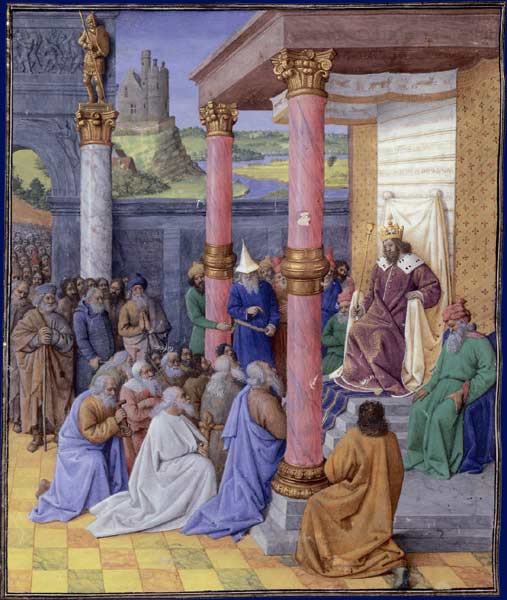 Cyrus was born between 590 and 580 BCE, either in Media or, more probably, in Persis, the modern Fārs province of Iran. During his reign, he founded the Achaemenian Empire, centered on Persia and comprising the Near East from the Aegean Sea eastward to the Indus River.
The figure of Cyrus has survived history as more than a great man who founded an empire. He became the very epitome of the qualities expected of a ruler of his time, and he assumed heroic features as a conqueror who was tolerant and magnanimous as well as brave and daring. His story is one that still fascinates historians today.
After inheriting the empire of the Medes, Cyrus had to first consolidate his power over Iranian tribes on the Iranian plateau before he could expand his empire to the west. Croesus, king of Lydia in Asia Minor, had grown his domains at the expense of the Medes when he heard of the fall of Astyages. Cyrus, as successor of the Median king, then marched against Lydia. Sardis, the Lydian capital, was captured in 547 or 546, and Croesus burned himself to death. The Ionian Greek cities on the Aegean Sea coast, as vassals of the Lydian king, now became subject to Cyrus, and most of them submitted, albeit after short sieges.
With his empire consolidated, Cyrus turned to Babylonia, where the unrest of the people with the ruler Nabonidus gave him a reason to invade the lowlands. The conquest was quick, and the greatest city of the ancient world fell easily to the Persians, but it did not become his sole capital. Cyrus had several capitals. One was the city of Ecbatana (modern Hamadan) former capital of the Medes, and another was a new capital of the empire, Pasargadae, in Persis, said to be on the site where Cyrus had won the battle against Astyages. The ruins today, though few, arouse admiration in the visitor. Cyrus kept Babylon as a winter capital.
As a ruler, he was quick to learn from peoples he conquered. He not only conciliated the Medes but united them with the Persians in a kind of dual monarchy of the Medes and Persians. Cyrus had to borrow the traditions of kingship from the Medes, who had ruled an empire when the Persians were merely their vassals.
 When Cyrus defeated Astyages, he also inherited Median possessions in eastern Iran, but he had to engage in much warfare to consolidate his rule in this region. After his conquest of Babylonia, he again turned to the east, and Herodotus tells of his campaign against the nomads who lived east of the Caspian Sea. According to the Greek historian, Cyrus was at first successful in defeating the ruler of the nomads called the Massagetai—who was a woman—and captured her son. On the son’s committing suicide in captivity, his mother swore revenge and defeated and killed Cyrus. Herodotus’ story may be apocryphal, but Cyrus’ conquests in Central Asia were probably genuine, since a city in farthest Sogdiana was called Cyreschata, or Cyropolis, by the Greeks, which seems to prove the extent of his Eastern conquests.
Very little is known of the family life of Cyrus. He had two sons, one of whom, Cambyses, succeeded him; the other, Bardiya, was more than likely put to death by Cambyses after he became ruler. Cyrus had at least one daughter, Atossa, who by all accounts married her brother Cambyses.
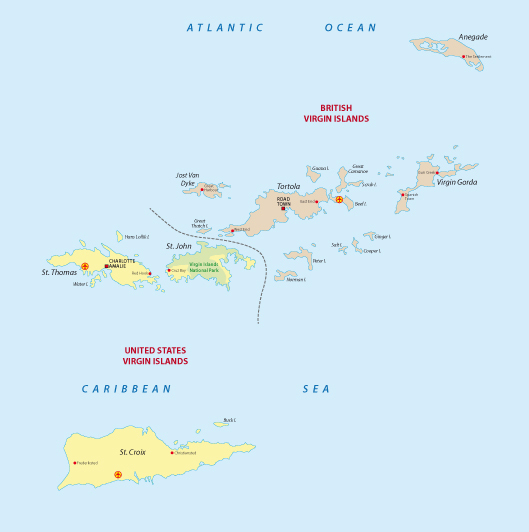 It was Columbus who first discovered the beautiful Virgin Islands on his second voyage to the New World in 1493. When he saw so many isles and cays, he named them after the virgin followers of Saint Ursula, who was martyred in the fourth century. The Spanish did not spend too much time on the islands, though, since they were unable to find gold there. They quickly set sail and moved on to gold-rich lands.
Pirates soon figured out a way to become rich off the Virgin Islands. The numerous hidden coves along with shallow waters and complex reef systems provided the perfect spot to pillage passing ships carrying riches from the New World back to Europe. The islands became a favored hangout of famous scoundrels such as Blackbeard, Bluebeard and Sir Francis Drake.
During the 17th century, both the British and the Dutch developed interests on the Virgin Islands. The British established and maintained control that allowed them to remain in power on the islands for over three centuries. They created an incredibly profitable sugar industry with huge plantations worked by African slaves. The abolishment of slavery in 1838, however, was the demise of the plantation economy; as a result, many European settlers returned home, and the islands returned to serenity.
 From the 1800s forward, things stayed quiet on British Virgin Islands until the early 1960s, when Laurance Rockefeller and Charlie Cary essentially started the tourism boom there. Recognizing the tourism potential of the islands, Rockefeller developed the Little Dix resort on Virgin Gorda, and Cary established a marina complex on Tortola but made sure to allow the islands to remain a charming destination, unspoiled by overdevelopment similar to the neighboring U.S. Virgin Islands. Building codes stipulate that structures cannot rise higher than the islands’ very tallest palm trees, hence two stories is the limit for any building on the islands.
During the 1960s, the British Virgin Islands were given greater autonomy within the British Commonwealth. The islands have their own constitution and a local legislative council which handles island affairs. The governor, who is selected by the Queen, deals in external affairs and island security. Today these islands represent some of the greatest tourism attractions in the world. Holiday makers from around the world visit the islands to escape the stresses of the modern world—and who can blame them?

Tides Of Fortune Box Set
“A gripping tale of pirate adventure off the coast of 19th Century Florida!”
A thrilling high-seas adventure series from renowned storyteller Steven Becker.
 Today the box set of all three books in the Tides of Fortune series is available.
Includes Pirate, The Wreck of the Ten Sail, and Haitian Gold.
Available in Kindle

La Sultana
An Ex-Soviet spy ship, the La Sultana is one of the largest superyachts in the whole world. Measuring in at 65.4 meters long, this yacht was converted into a luxury superyacht by the La Sultana hotel group. In 2015, she underwent a major rebuild and is currently up for sale.
Invictus
Previously known as Project Invader, Delta Marine’s Invictus is its second largest build yet. She was built with an ice strengthened steel hull and a composite superstructure which was designed by Delta Design. With such a large range and features such as a pool on the sundeck, a theatre, and a gymnasium, this boat has the capability of keeping her guests entertained on long hauls. At 65.5 meters, Invictus is Delta’s ‘made in America’ superyacht that is designed for world domination.
Ocean Victory
Ocean Victory was built in Fincantieri’s Muggiano yard in Italy. This seven-deck yacht is based on a design by Espen Oeino, with an interior by Alberto Pinto and Laura Sessa. It includes internal sea water dockage for a 14-meter tender and six pools of up to eight meters in length. Her first steel plate was cut in September 2010. Little is known about this top-secret project, which is kept much under wraps and away from prying eyes.
Prince Abdulaziz
Commissioned in 1984, the 5,200-ton Abdulaziz serves as the Royal Yacht for King Abdullah of Saudi Arabia, who inherited her from the late King Fahd. She was built in 1984 by the Danish yard Helsingor Vaerft to a design by Maierform at a reported cost of over $180m. Her interior, designed by the late David Hicks, who was renowned for his dramatically colorful work, blended ancient and modern. She was fitted out in Southampton, England.
Now showing her age, she is likely to be replaced in the near future. The yacht was refitted in 1987, 1996 and 2005.
 Azzam
Azzam
Not much is known about this behemoth of a yacht other than the specs and that her interior is in a relaxed French Empire style, but it is rumored to have been built for a member of the royal family of Abu Dhabi of the United Arab Emirates. The technical engineering was directed by Mubarak Saad al Ahbabi for the owner. She has an impressive speed due to her innovative water-jet propulsion system, which catapults this 180-meter yacht at a staggering speed of 31.5+ knots. At 17.5 meters longer than Roman Abramovich’s Eclipse, this boat takes the title of the world’s largest yacht.
If you would like to be in with a chance of winning one of five signed paperbacks of Haitian Gold, then all you have to do is enter the Goodreads Giveaway. It’s running until March 22, so you still have a few days left. It’s free to enter and only open to residents in the US.


 Steven Becker